Piggy backing into the world of competitive marketing

Are you ready to be ambushed?

Are you ready for a marketing battle with your biggest competitor? If you are then welcome to the world of ambush marketing!

Ambush campaigns are generally launched by big brands at big events,  the downside of this type of play is that it can cost huge amounts but the rewards can also be huge. Imagine your biggest rival has managed to secure the contract for a main event which will be attended by thousands and watched by millions it could be a major sporting event or a concert. Using ambush marketing to try and attract the attention from them to your company could be a tricky and strategic challenge. Over the years many major companies have tried and succeeded in doing this either to put a negative slant on a competitor or to capitalise on a huge audience. Pepsi and Coca-Cola have for many years been major competitors and they have been involved in numerous ambush marketing strategies. (Economic Time, 2019)

In 2002 FIFA accused Pepsi of an ambush campaign. Coca-Cola had paid £20 million to be the main sponsor of the World Cup football tournament however Pepsi had written the words ‘Tokyo 2002 ‘ alongside famous players for example David Beckham who were linked to various teams playing at the tournament (Campaignlive.co.uk, 2002). A similar strategy was used by Pepsi again in 2014 using the likes of Lionel Messi as part of the campaign ‘Live for now’ (Campaignlive.co.uk, 2014)

Using similar tactics a Dutch Brewery Bavaria bought 36 orange mini dresses with the brand name written in very small print. During a World Cup match in June 2010 they arranged for 36 woman to wear the dresses whilst seated together in the stadium, this attracted the attention of the media and the women and their coloured outfits were streamed to millions, all 36 woman were ejected for the stadium. Budweiser had paid millions to be the main sponsor at the event (BBC News, 2010).

Ambush marketing may look like childish, immature rivalry but can have dramatic effects.

References

BBC News. (2010). Fifa acts on Dutch ‘beer stunt’. [online] Available at: https://www.bbc.co.uk/news/10321668 [Accessed 3 Jan. 2019].

Campaignlive.co.uk. (2014). Pepsi signs up Messi to ambush Coke’s World Cup sponsorship. [online] Available at: https://www.campaignlive.co.uk/article/pepsi-signs-messi-ambush-cokes-world-cup-sponsorship/1227538 [Accessed 3 Jan. 2019].

Campaignlive.co.uk. (2002). WORLD CUP 2002: Ambush marketing – How to steal the World Cup. It costs a small fortune to be an official sponsor of the World Cup, so here are 11 ways to get noticed for a fraction of the price. [online] Available at: https://www.campaignlive.co.uk/article/world-cup-2002-ambush-marketing-steal-world-cup-costs-small-fortune-official-sponsor-world-cup-so-11-ways-noticed-fraction-price/145012 [Accessed 3 Jan. 2019].

The Economic Times. (2019). Ambush Marketing – What is Ambush Marketing ? Ambush Marketing meaning, Ambush Marketing definition – The Economic Times. [online] Available at: https://economictimes.indiatimes.com/definition/ambush-marketing [Accessed 3 Jan. 2019].
Are you too emotional to market?

Emotional Advertising

Being an emotional type of person (or as I am sometimes described “over emotional” ) I am intrigued by the impact of emotions on a persons buying strategy.

Emotional marketing refers to marketing that uses emotion to make an audience notice, remember, share and buy. It typically taps into emotions of happiness, sadness, anger or fear to elicit a consumer response.(Blog hubpsot.com, 2018). “Feelings and emotions play an important role in advertising especially when advertising is used to build awareness levels and brand strength” (Fill, C. 2011, p240).

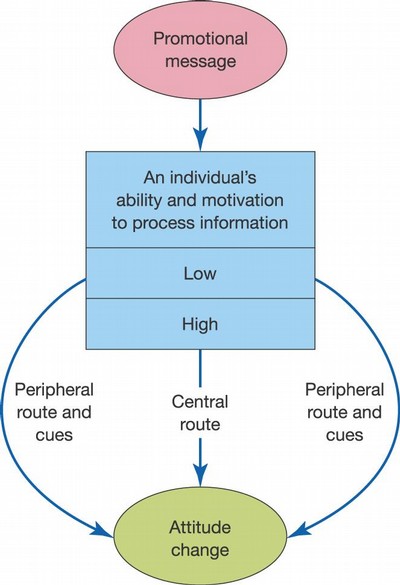
The Elaboration likelihood Model

The Elaboration likelihood model is a key model used to consider the changing attitudes of consumers in emotional advertising. The elaboration continuum is used to demonstrate how involved the consumer is in an advertisements, those with high involvement take a central route, whereas, low involvement consumers take a peripheral route processing (Szmigin and Piacentini, 2015). Iceland’s Rang Tan advert is engaging as it is informative as well as the use of peripheral cues of the rhyme and the picture of the girl and orangutan, ‘encouraging deeper engagement with the brand’ ( Szmingin and Piacentini, 2015, p221).


Benefits of using an emotional advert

Using emotion within an advert can make it more memorable, if it makes you laugh or cry this has a psychological impact on your emotion and it makes advert difficult to forget. A recent example of this was Iceland’s controversial, animated advert Rang Tan’  which was not allowed to be shown on TV as it was deemed too political, which breaches the broadcast code of advertising practice.

The advert originally produced by Greenpeace highlighted the impact on the environment of firms collecting palm oil and the subsequent destruction of the rainforests and the effect on the existence of the Orangutan. This impactive advert although not shown on TV as originally planned, has been viewed 605,815 times on YouTube on the Greenpeace site and 5,732,124 views on Iceland’s advert page. The fact that this advert was supposedly ‘banned ‘ from TV has quite possibly increased the success and hype of the advert.  With over 30 million views across social media the Iceland advert is likely to become the most popular Christmas advert on social media. Celebrities across the world have added to the hype with James Corden tweeting ‘this commercial was banned from TV for being too political, I think everyone should see it’ was shared over 441,000 times (The Telegraph, 2018).

Iceland’s marketing director is reported in the Telegraph to have said, “we’ve been able to reach a huge number of customers without TV advertising, thanks to the level of support from campaigners, celebrities, media and of course the public” (The Telegraph, 2018).

Showing the power of emotional advertising at its best an advert that was never viewed on TV and cost very little to Iceland has had a dramatic effect. Ellen Hamlet reported “Iceland’s Rang-tan Christmas advert the most likely to make people buy” (Marketing week, 2018) and was reportedly the best received advert overall.

References

Blog.hubspot.com (2018). The Ultimate Guide to Emotional Marketing. [online] Available at: https://blog.hubspot.com/marketing/emotion-marketing [Accessed 7 Dec. 2018].

Fill, C. (2011) Essentials of Marketing Communications. Harlow: Pearson Education Limited . P240

Marketing Week. (2018). Iceland’s ‘Rang-tan’ Christmas ad the most likely to make people buy. [online] Available at: https://www.marketingweek.com/2018/12/04/iceland-rang-tan-christmas-ad-make-people-buy/ [Accessed 7 Dec. 2018].

Rang Tan. (2018). [image] Available at: https://www.independent.co.uk/news/business/news/iceland-christmas-advert-not-banned-clearcast-orangutan-palm-oil-a8634071.html [Accessed 7 Dec. 2018].

Szmigin, I and Piacentini, M. (2015) Consumer Behaviour . Oxford : Oxford University Press. P 121

The Telegraph. (2018). Iceland’s ‘banned’ advert could become most popular ever on social media by Christmas as clearance agency warns of copycats exploiting ’emotive’ loophole. [online] Available at: https://www.telegraph.co.uk/news/2018/11/13/icelands-banned-advert-could-become-popular-ever-social-media/ [Accessed 7 Dec. 2018].

All I want for Christmas…is the new Christmas Ad


Seasonal Advertising

An illuminated, iconic, American Coca-Cola truck driving through the snow in 1995 with the jingle “holidays are coming” was possibly the start of the traditional Christmas advert.  How things have changed!

Since the advent of the ‘Christmas advert’ in 2009 its popularity has shown a steady increase both in pace, cost and impact on the public. It’s reported that “Christmas advertising is set to reach a new high of £6.4 billion” (BBC News) in 2018 and that in the last eight years spending on Christmas adverts has increased by 50% (BBC News, 2018).

It is argued that ‘festive campaigns work because they contain an emotional trigger which we associate with the brand making us spend’ (Campaignlive.co.uk, 2013). John Lewis appears to be one of the fore runners in seasonal advertising with their hugely successful ‘The Bear and the Hare ‘ advert in 2013 right up to the Elton John 2018 advert which delivers the message that “Some gifts can be more than a gift “ implying that a gift could inspire, change or influence someone’s life (John Lewis & Partners, 2018). In light of current financial uncertainty with Brexit the message that it is not the cost or number of presents but the impact that the gift could have on a person’s future, could have the ability to encourage people to buy from John Lewis.

Are the cost necessary or worth it?

The financial implications of businesses paying for seasonal adverts are huge but need to be cost-effective. In 2016 the John Lewis advert cost £7 million, the cost of the 2018 advert is unconfirmed but Elton John is believed to have been paid £5 million for starring in it. (Express.co.uk, 2018) In complete contrast videography Phil Beastall has produced his own seasonal video costing £50 the message being that ‘ life is a gift’. The response to this low-budget video has been massive with 1,788,931 views on YouTube showing that a successful advert does not need to be high cost (The Independent, 2018).
This year a strong competitor for the best seasonal advert is Sainsbury’s ‘ The Big Night Christmas 2018’, Conran Design Group and Socialyse studied 11,000 tweets in relation to sentiment score and Sainsbury’s came out on top (Retail Gazette, 2018). Showing that seasonal advertising especially at Christmas is most closely linked to emotional advertising.

The Christmas advert with the ‘catchy ‘ theme tune have notoriously invoked emotion but whether they invoke increased spending is debatable maybe the future will be low budget, thought provoking adverts, produced by unknowns let’s see what 2019 brings!

References:                                                                                               

BBC News. (2018). Big retailers unveil Christmas ads. [online] Available at: https://www.bbc.co.uk/news/business-46191733 [Accessed 19 Dec. 2018].

Campaignlive.co.uk. (2013). Seasonal ad campaigns: what makes them work?. [online] Available at: https://www.campaignlive.co.uk/article/seasonal-ad-campaigns-makes-work/1223930 [Accessed 15 Dec. 2018].

Express.co.uk. (2018). John Lewis Christmas advert 2018 cost: How much did the John Lewis ad cost?. [online] Available at: https://www.express.co.uk/showbiz/tv-radio/1045662/John-Lewis-Christmas-advert-2018-cost-How-much-did-John-Lewis-ad-cost-Elton-John-piano [Accessed 17 Dec. 2018].

John Lewis & Partners. (2018). The John Lewis & Partners Christmas Advert. [online] Available at: https://www.johnlewis.com/content/christmas-advert [Accessed 14 Dec. 2018].

Retail Gazette. (2018). Sainsbury’s Christmas advert voted best of 2018 – Retail Gazette. [online] Available at: https://www.retailgazette.co.uk/blog/2018/11/sainsburys-christmas-advert-voted-best-of-2018/ [Accessed 17 Dec. 2018].

The Independent. (2018). Heart-wrenching £50 Christmas advert praised as being ‘better than John Lewis campaign’. [online] Available at: https://www.independent.co.uk/life-style/christmas-advert-phil-beastall-love-is-a-gift-video-viral-john-lewis-elton-john-a8648336.html [Accessed 17 Dec. 2018].